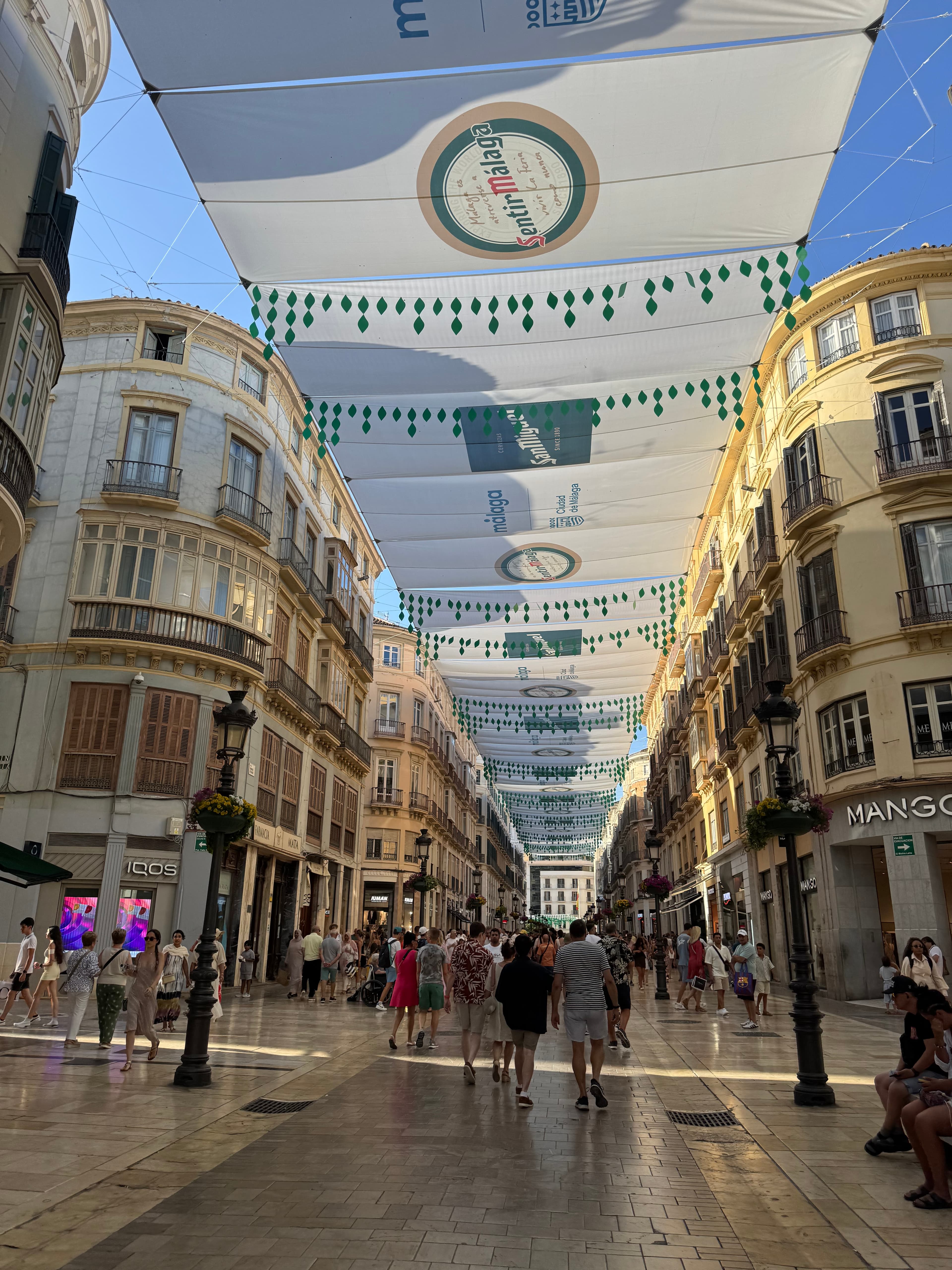
Málaga is the city I grew up in, and even though I no longer live here, it is a place I always love coming back to. In this guide, I am sharing the places I think are worth visiting, the restaurants I would recommend and a few things you should know before exploring the city.
But first, a little history, because Málaga has quite an interesting past.
A LITTLE BACKGROUND
A LITTLE HISTORY OF MÁLAGA.
My favourite chapter of Málaga's history begins during the Moorish period (711–1487), when the city was known as Malaqa. Following the Muslim conquest of the Iberian Peninsula, Málaga grew into an important cultural and economic centre, with architecture from this period still very much part of the city today. Two of Málaga's most recognisable landmarks, the Alcazaba and Gibralfaro Castle, date back to this period.
In 1487, after a long and difficult siege, Málaga was captured by the Catholic Monarchs, Ferdinand and Isabella, as part of the Reconquista, marking the end of Muslim rule in the city.
The centuries that followed brought many changes to Málaga. After periods of economic difficulty, the city grew into one of Spain's important industrial centres during the 19th century. However, towards the end of the century, a disease destroyed many of Málaga's vineyards, seriously affecting the local economy.
From the 20th century onwards, Málaga has reinvented itself, becoming a lively cultural destination and a gateway to the Costa del Sol. And while you may visit for the beaches and sunshine, a little history makes your trip so much more interesting.
Málaga is definitely a city worth visiting. Its narrow streets are made for wandering, with little shops, cafés and restaurants that you discover along the way. Almost every winding street in the historic centre leads to another beautiful corner.
But now come the real questions: what should you not miss in Málaga, and what is the city famous for?
01 / THE HISTORIC FORTRESS
THE ALCAZABA OF MÁLAGA.
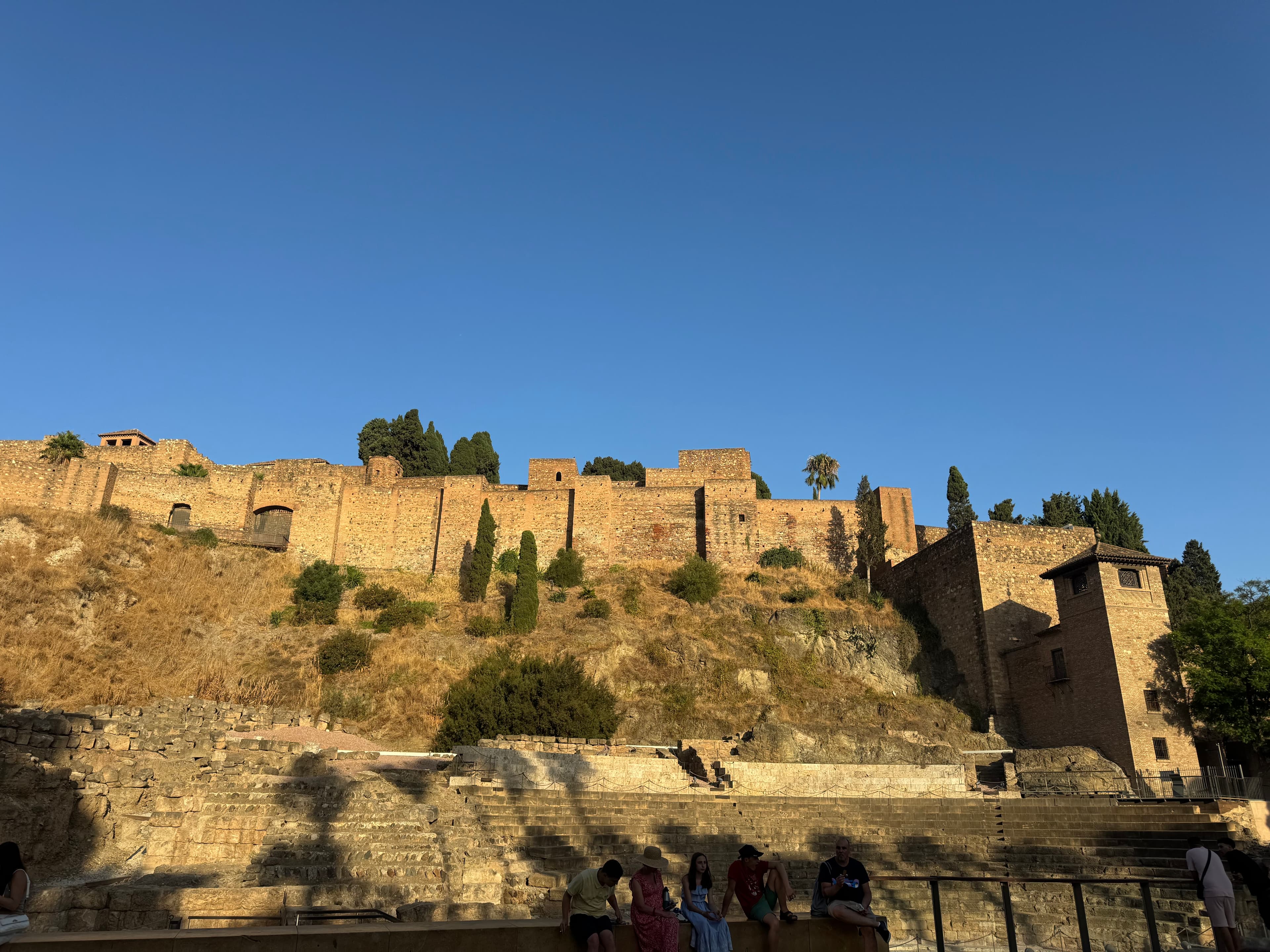
This palatial fortification dates back to the Al-Andalus era and sits right in the heart of Málaga.
The name Alcazaba comes from the Arabic word al-qaṣabah, meaning fortress or citadel, which makes perfect sense once you see it. What makes it so special is what you see inside. Think beautiful courtyards, arches, fountains and gardens filled with greenery. As you make your way up, the views over the city are not to be missed.
And a little fun fact: the Alcazaba is connected to Gibralfaro Castle, sitting even higher up the hill, by a passageway called La Coracha. So, if you spot the castle above you, you now know how the two were once connected.
The Alcazaba is open from 9:00 to 18:00 in winter (November–March) and from 9:00 to 20:00 in summer (April–October), with last entry one hour before closing. A regular ticket costs €7. Always check the latest prices and opening hours before visiting.
EXPLORE THE ALCAZABA & ROMAN THEATRE
Discover two of Málaga's most fascinating historic sites with a guided experience. A lovely way to learn more about the city's past.
VIEW TICKETS & AVAILABILITY Check prices, availability and tour details on Viator.02 / ROMAN MÁLAGA
THE ROMAN THEATRE.
The Roman Theatre sits right below the Alcazaba, bringing together two very different periods: the Roman and Moorish eras. It is one of the oldest Roman theatres in Spain and was used for performances and public gatherings until around the 3rd century AD. What I find very interesting is that it was hidden for centuries before being rediscovered in 1951.
Another interesting detail is how the two sites are connected. When visiting the Alcazaba, you can still spot Roman columns and architectural details that were reused during the Muslim period. I think it is fascinating to see how different parts of Málaga's history come together in one place. And since the two are next to each other, it makes perfect sense to explore both during the same visit.
SEE BOTH HISTORIC SITES
Explore the Roman Theatre and Alcazaba together on a guided tour.
EXPLORE THE TOUR03 / LA MANQUITA
MÁLAGA CATHEDRAL.
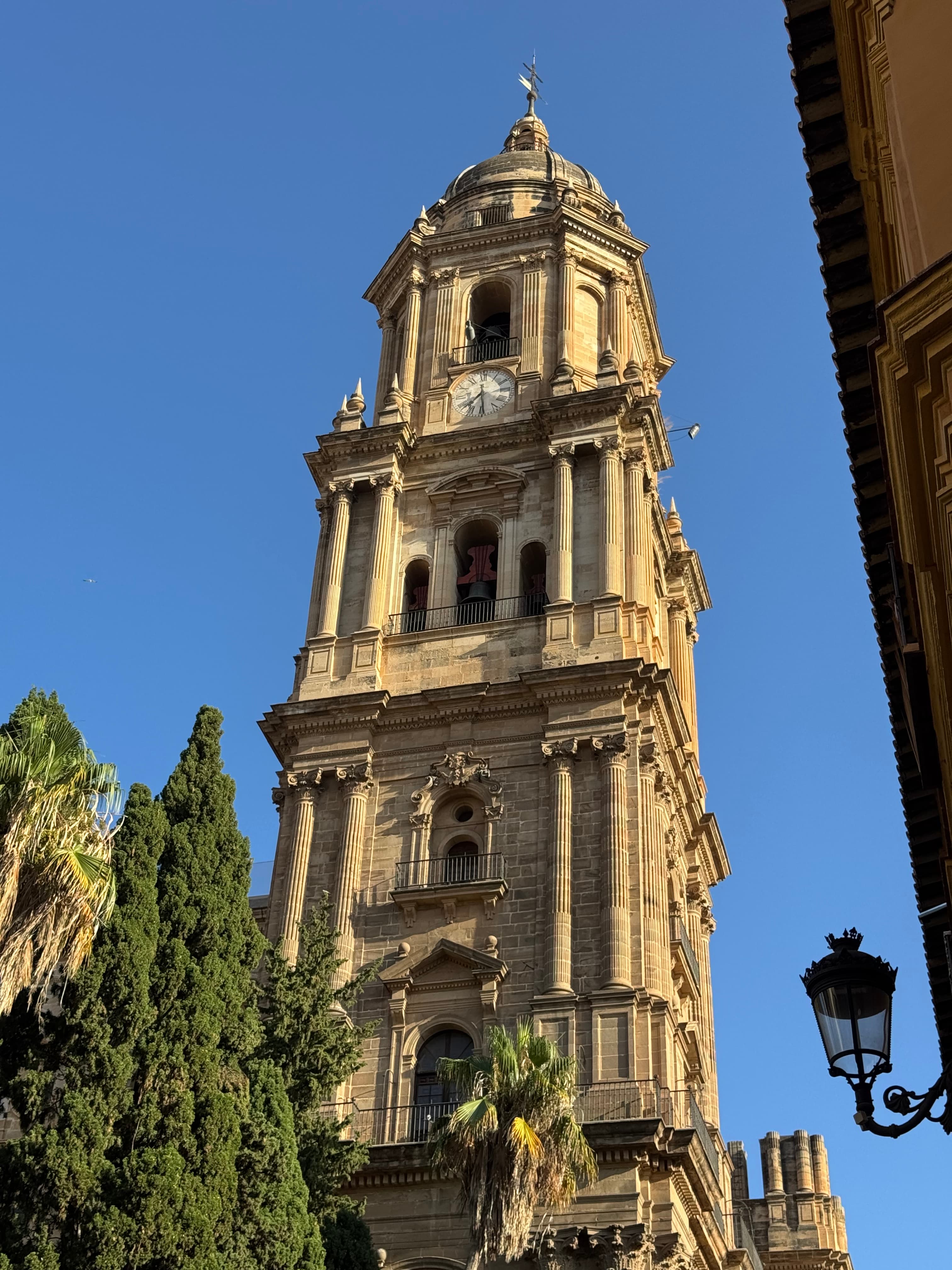
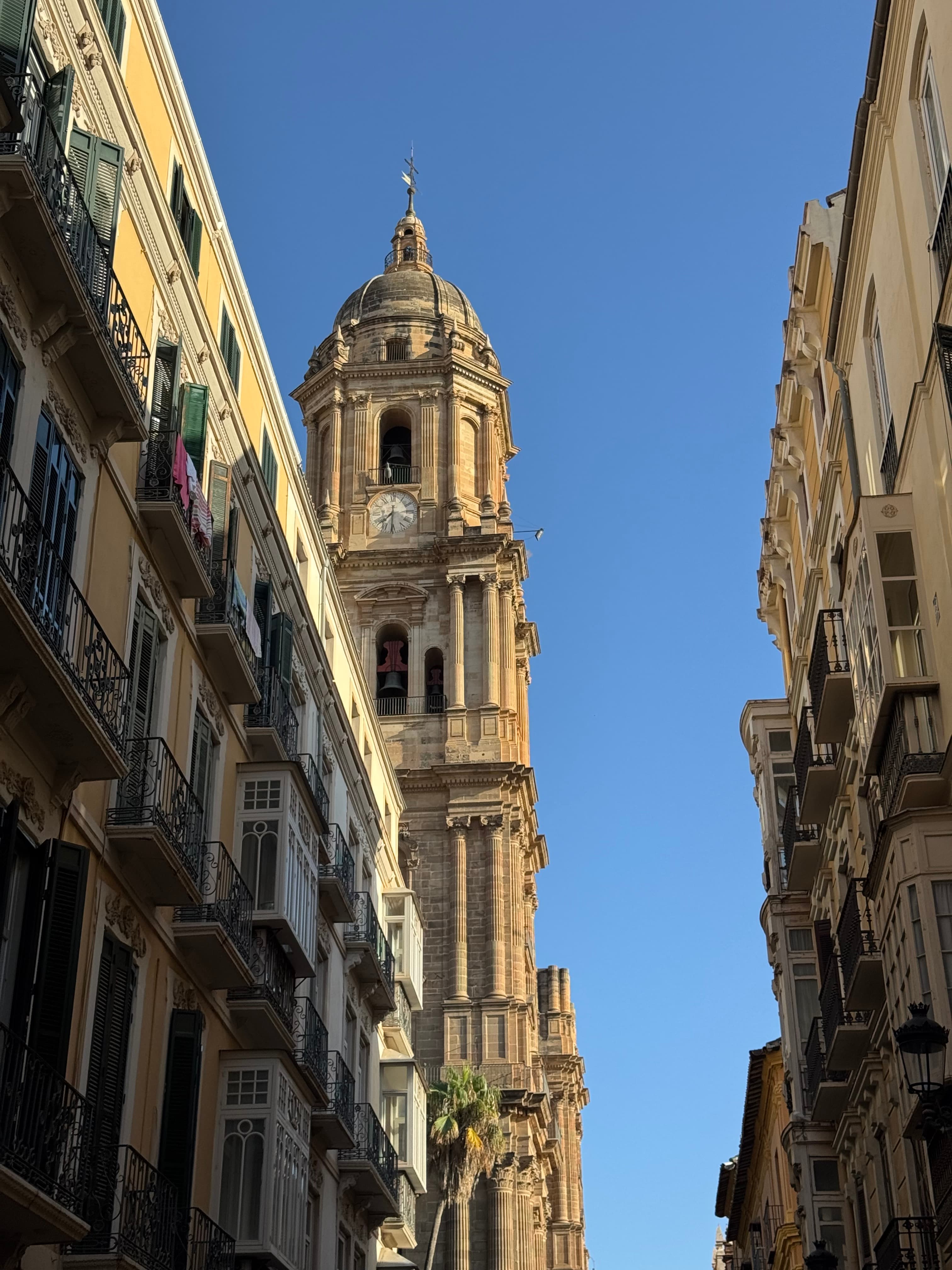
In the historic centre, you will also find one of Málaga's most impressive landmarks, Málaga Cathedral. Its construction began in the 16th century and continued for more than 200 years, explaining why the cathedral has a mix of architectural styles, mainly Renaissance and Baroque.
What I find most interesting is its nickname, La Manquita, which translates to "the one-armed lady". If you look closely, you will notice that the cathedral only has one completed tower. The second tower was never finished, giving the building its famous nickname.
Whether you decide to go inside or simply admire it while walking through the centre, the cathedral is definitely one of those sights you cannot miss in Málaga.
DISCOVER MÁLAGA'S CATHEDRAL
Explore Málaga's historic centre and discover the stories behind its famous cathedral on a guided tour.
VIEW TICKETS & AVAILABILITY Check prices, availability and tour details on Viator.04 / THE HEART OF THE CITY
CALLE MARQUÉS DE LARIOS.
If there is one street you cannot miss in Málaga, it is Calle Marqués de Larios, or simply Calle Larios, as everyone calls it. It is one of the most famous streets and probably one you will walk through more than once during your visit.
What makes Calle Larios so special is its beautiful 19th-century architecture, with elegant, tall buildings and balconies on both sides of the street. Today, Calle Larios is more than just a shopping street. It is where many of Málaga's biggest celebrations take place, from the famous Christmas lights to Semana Santa, the August Fair, Larios Fashion Week and so much more. No matter the time of year, Calle Larios is always one of the liveliest places in the city.
You will also find plenty of shops, cafés and little streets branching off into the historic centre. My advice is to wander beyond Calle Larios itself, because some of the nicest corners of Málaga are hidden just around it.
Some streets to explore are Calle Granada, Calle Victoria, Calle Compañía, Calle Alcazabilla and Calle Císter. Each leads you past different corners of the old town, from museums and churches to the Cathedral and Roman Theatre.
05 / BY THE WATER
MUELLE UNO.
Muelle Uno is located by Málaga's port, just a short walk from the historic centre. Perfect for a stroll along the water, it has plenty of shops, restaurants and terraces where you can stop for a drink or something to eat. Opened in 2011, it is a more modern part of the city, and can get busy during the warmer months.
You will also find the colourful Centre Pompidou Málaga here, a modern art museum that is hard to miss. If you keep walking, you will reach La Farola, Málaga's famous lighthouse, with La Malagueta beach just around the corner.
I particularly like coming here in the late afternoon, when you can walk along the port, see the sunset and enjoy the breeze before heading somewhere for dinner.
06 / THE FOOD EDIT
GASTRONOMY IN MÁLAGA.
Málaga's restaurant scene is something worth talking about. From fish to meat tapas, you can find it all, with plenty of flavour and often at a great price.
El Pimpi
El Pimpi is one of Málaga's most famous restaurants, dating back to 1971. It is known for its traditional Andalusian atmosphere, beautiful patios and wine barrels signed by famous visitors, and has become a place worth seeing even if you are just stopping for a drink.
Here you will find plenty of local dishes on the menu, from croquetas and fried fish to slow-cooked Iberian pork cheeks. And if you want to try something typical from Málaga, order a glass of sweet local wine. Like many popular spots, El Pimpi can get very busy, so do not be surprised if you find a queue outside.
Casa Lola
Casa Lola is another favourite in Málaga, especially if you love sharing tapas and trying a little bit of everything. The menu offers everything from montaditos (small sandwiches) to croquetas, patatas bravas and plenty of other tapas. There are several locations around the historic centre, making it an easy stop while exploring the city. Similar to El Pimpi, it is usually busy, with people gathered around the bar and tables filled with dishes.
Vermutería La Clásica
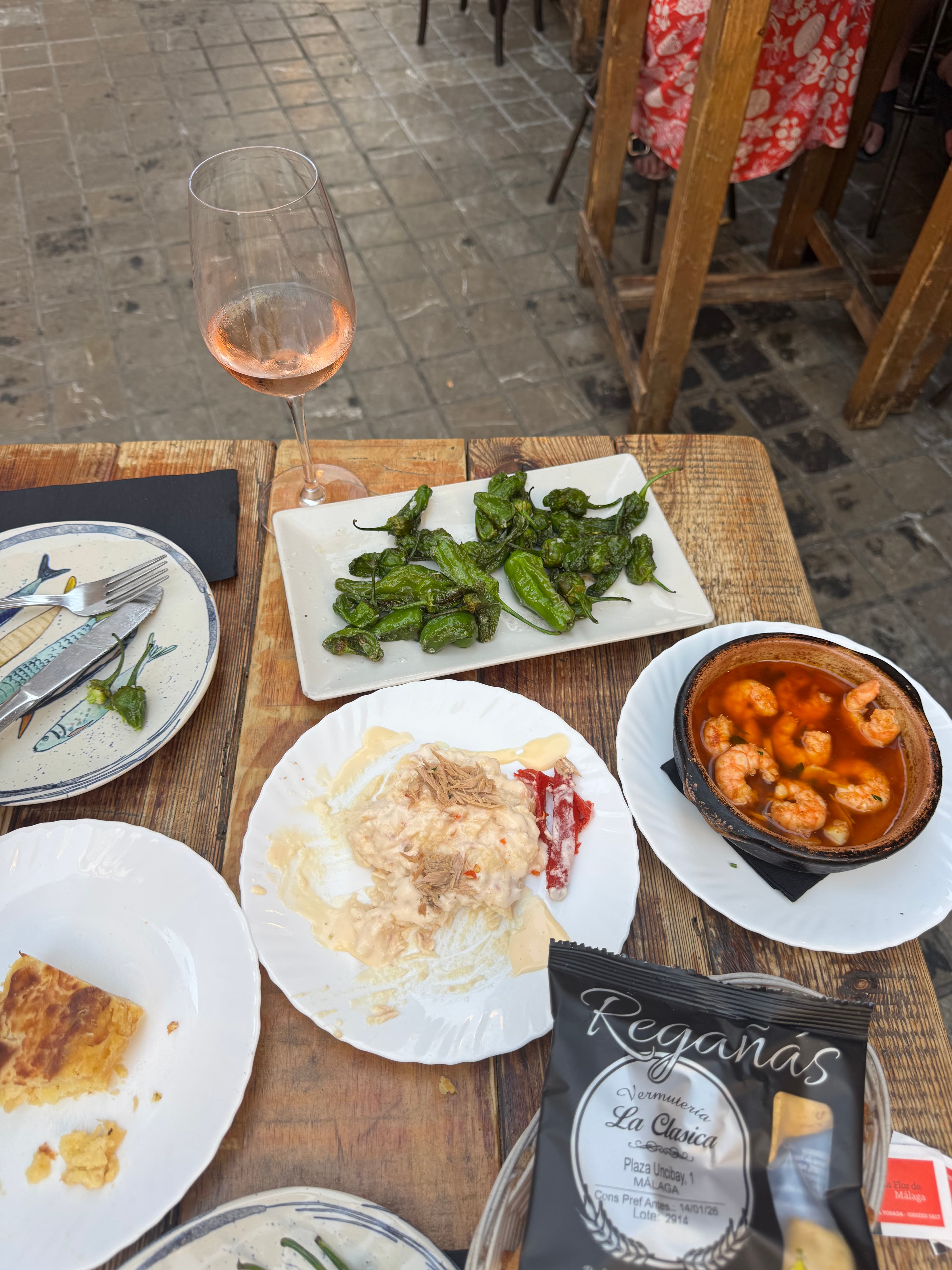
If you would rather avoid the long queues, my third recommendation is Vermutería La Clásica. Most times I come back to Málaga, this is my go-to spot, whether I am in the mood for a vermouth, a glass of rosé or some tapas.
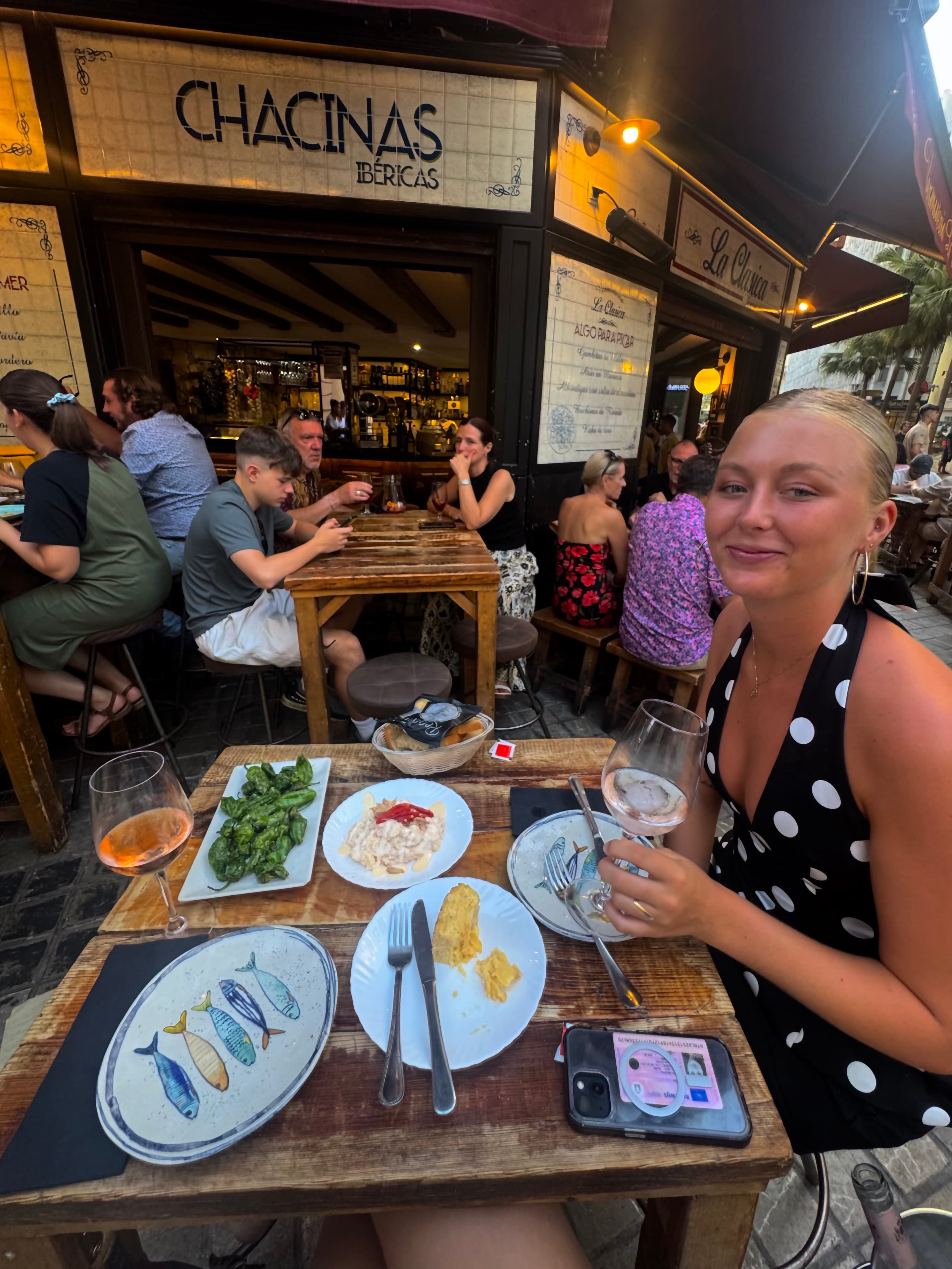
And one more thing: espetos
While these three restaurants are great options in the city centre, there is one Málaga speciality I could not leave out: espetos. Espetos are sardines grilled on skewers over an open fire, usually right on the beach. In Málaga, people love them so much that they eat them all year round. Even in winter, you can usually find them at one of the beachside chiringuitos (beach restaurants).
However, locals have a little rule: the best months for espetos are the ones without the letter "r" in Spanish: mayo, junio, julio and agosto (May to August).
During these months, sardines are usually at their best, with a good size and plenty of flavour. So, if you are visiting Málaga in summer, leave the city centre for a little while, find a chiringuito by the beach and order a plate of espetos.
07 / AFTER DARK
MÁLAGA BY NIGHT.
Málaga is just as fun at night as it is during the day. Once the sun goes down, the historic centre fills with people heading out for tapas, drinks and a night that often lasts much longer than planned.
My recommendation for a night in Málaga is to start around Plaza de la Merced, Plaza Mitjana or Plaza de Uncibay, where you will find plenty of bars and terraces. In Spain, dinner starts quite late, so do not be surprised if you still see streets full of people eating at midnight, especially during the summer months.
If you are in the mood for a night out, Málaga has plenty of options. You can head to clubs like Sala Gold, Liceo and Andén. These are all within walking distance of the old town, so it is easy to move from place to place.
For a more relaxed evening, I would recommend a rooftop bar. There is Terraza Molina Lario and La Terraza de San Juan, where you can enjoy a drink overlooking the city. Of course, another option is to walk along Muelle Uno, especially on a warm summer evening.
And if you are not in the mood for bars or clubs, simply walking through Málaga at night is already a lovely plan. My advice is not to plan your evening too much. Start with dinner, and see where the night takes you.
THE FINAL WORD
SENNA SAYS.
Málaga is absolutely worth it! And I am not just saying that because I grew up here. Málaga has so much more to offer than its beautiful beaches and sunny weather. Impressive architecture, historic streets, endless tapas bars and lively evenings — there is always something to do.
So, if you are planning a trip to the Costa del Sol, make sure to spend at least a couple of days in Málaga itself. It is much more than just a stop on the way to the beach.
Have any questions about visiting Málaga, or looking for recommendations? Feel free to reach out at hello@thesennaedit.com. I am always happy to share more about the city I grew up in.
This article may contain affiliate links, which means I may earn a small commission if you book through one of my links, at no extra cost to you.
← BACK TO MÁLAGA